Reckitt’s VEET Team: Journey for Superiority
October 23, 2025
The Da Vinci Dilemma: Innovation Discipline to ensure the right moral direction
February 16, 2026Every great business transformation begins with one truth: growth happens when we stay close to the people we serve.
When we truly understand their pain points, anticipate their needs, and see their experiences first-hand, we unlock insight, trust, and momentum that no spreadsheet or dashboard can provide.
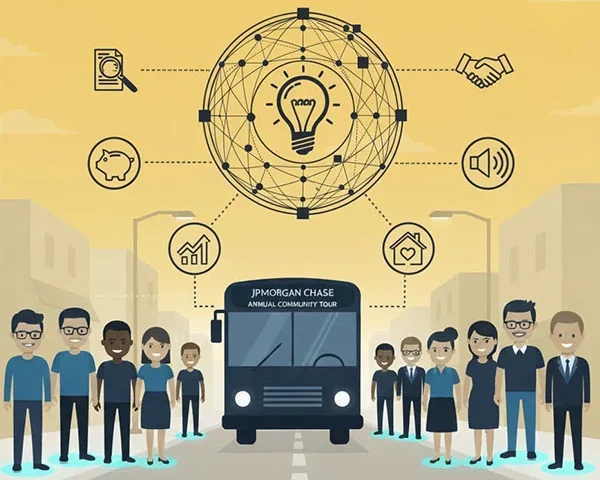
That principle is embodied in one of the most revealing leadership practices in corporate America: Jamie Dimon’s annual bus tour across the United States. As reported by The Wall Street Journal (“Riding Along on Dimon’s Bus Tour,” August 11, 2025), each summer the JPMorgan Chase CEO and his senior leadership team leave their New York headquarters and travel through communities in Mississippi, Alabama, Georgia, and the Carolinas. They spend days visiting branches, meeting local employees, talking to customers, and sitting down with community leaders and small business owners.
The goal isn’t publicity. It’s learning. Dimon explained: “If you want to be a good CEO, you have to get out. You talk to customers, to local government, to employees — and you listen to what they tell you.” These tours yield far more than surface impressions. Leaders return with pages of insights, what’s working, what isn’t, and what the data never showed. The conversations reveal small but powerful truths: communities that need new mortgage products, markets underserved by capital, and opportunities to strengthen local partnerships. Over time, those visits have translated into concrete initiatives and accelerated growth, helping Chase expand its footprint across all 48 contiguous U.S. states and become one of the fastest-growing major banks in the country.
Why this matters
Dimon’s bus tour isn’t just a banking story, it’s a leadership story. It reminds us that proximity is strategy. The closer we are to the people we serve, the faster we can see what’s changing, the sooner we can act, and the more deeply we can earn trust.
In every industry, consumer goods, retail, healthcare, technology, finance, distance from the consumer creates distortion. Dashboards flatten experiences into numbers. Reports summarize insights into slides. AI tools, even the most advanced, can synthesize trends but not feel them.
A field visit, on the other hand, brings life into the data. It turns an abstract “consumer segment” into a real person with context, barriers, and dreams. It’s the manager explaining why a promotion fell flat, the customer showing how they actually use your product, or the frontline employee revealing a workaround you never knew existed. Those human moments are where innovation is born.
The implications of proximity
1. It builds empathy and credibility. When leaders spend time where their customers and employees are, they send a powerful signal: we care enough to show up. That presence builds authenticity, inside and outside the organization.
2. It reveals hidden friction. No algorithm will tell you why a shopper hesitates between two packages or why a customer abandons a digital process halfway through. Seeing it live exposes the obstacles you can remove to create delight.
3. It creates speed and foresight. By being there, leaders see trends earlier. They can spot what consumers are improvising before the data catches up. That ability to sense-and-respond ahead of competitors becomes a decisive edge.
4. It fuels purposeful innovation. Real-world observation doesn’t just lead to ideas; it leads to the right ideas, grounded in real human needs, not theoretical assumptions. Innovation becomes less about guessing and more about serving.
5. It reminds us that technology is an enabler, not a replacement. AI, big-data analytics, and tools like ChatGPT can illuminate patterns, simulate conversations, and guide decision-making. But they cannot replace the connection that comes from being present, listening, observing, asking questions and empathizing.

Making proximity a discipline
Proximity can’t depend on personality or passion alone. It must be built into the discipline of how an organization works. That means leaders at every level spending time in the field. It means turning insights from those visits into immediate action items, and closing the loop with teams who surface them. It means balancing digital intelligence with human intelligence, and valuing both in decision-making. When proximity becomes a leadership habit, it creates a culture of learning, humility, and responsiveness. The result: faster and better innovation, deeper engagement, and sustained growth.
From insight to impact
At TicTacToe Innovation, we help organizations build the Innovation Mindset and the Innovation Discipline to make this real. Because when you stay close, you don’t just learn, you innovate better and faster, You lead and win in the market place.