

Mondelez Latam TicTacToe Innovation Mindset
February 16, 2026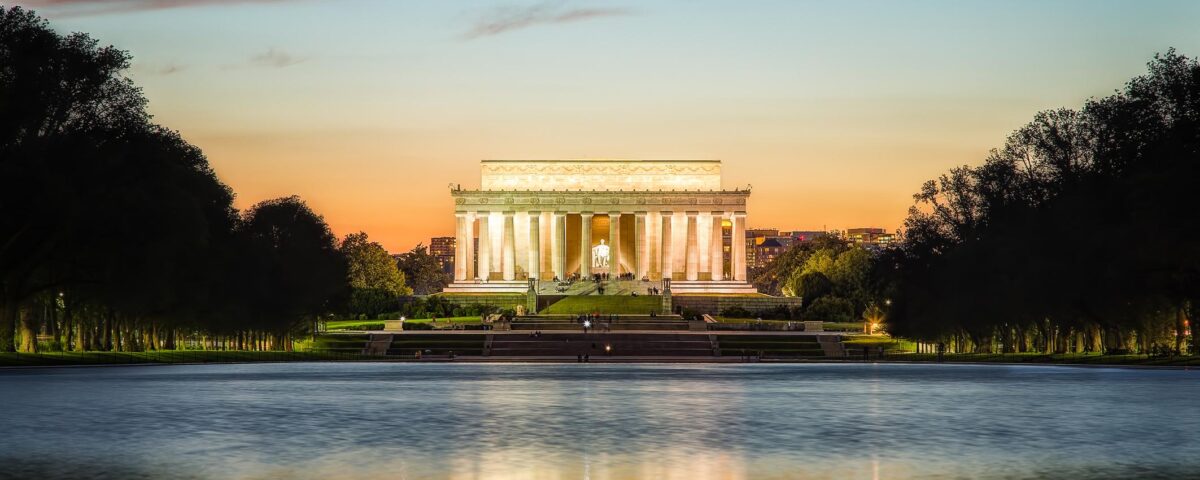
The Importance of the Form
Living in the Washington, DC area has given me the privilege of climbing the steps of the Lincoln Memorial many times and experiencing its beauty in all its splendor.
The Lincoln Memorial represents something profound: a political vision. It expresses the beauty of democracy through architecture, a magnificent sculpture, carefully designed landscaping that transforms across the seasons, and powerful words carved into stone.
Intentionally or not, when we stand there, we feel something larger than ourselves, the grand vision the founders had for the nation.
But if we continue walking, we eventually encounter a very different building.
For a moment, it almost feels like we have stepped into The X-Files. The massive brutalist structure of the FBI headquarters rises in front of us. Here the feeling changes. We no longer feel surrounded by the idea of a government of the people, by the people, for the people.
The building may be efficient. It may even be modern. But it is also disconcerting and strangely dehumanizing. Again, intentionally or not, when we stand there, we feel a cold government.
Aristotle once suggested that the form of a thing shapes its meaning. Form expresses, intentionally or not, the reality of what something is, its essence.
We do not need to be philosophers to understand this. We do not perceive the world as abstract concepts, words, or spreadsheets. We perceive holistically. Our intellect works alongside our emotions, our senses, our imagination, our intuition, and our memories.
We grasp truths through stories, symbols, images, music, and architecture. The people who have truly changed the world did not move others with logic alone; they embodied their message through forms that resonated with both the human intellect and the human spirit.
Beauty
Let’s not confuse beauty with what is merely pretty.
Beauty is something deeper. To perceive beauty is to recognize something that is, in its own way, complete and fitting, not only on the outside, but in the very heart of what it is.
The English poet John Keats famously wrote:
“Beauty is truth, truth beauty—that is all
Ye know on earth, and all ye need to know.”
The better something illuminates truth and helps us discover it, the more beautiful it becomes.
The philosopher Saint Thomas Aquinas described beauty as something that is truthful, pleasurable, transformative, and revelatory. Beauty represents one of our highest and most integrated forms of understanding.
Returning to our architectural example, most of us agree that the Lincoln Memorial is beautiful. Its architecture, landscape, sculpture, and inscriptions allow us to participate in the ideals embodied by Abraham Lincoln: unity of the nation, freedom, democracy, and civil rights. The form and the message reinforce one another perfectly.
By contrast, the brutalist structure of the FBI headquarters also communicates something, perhaps efficiency, authority, or institutional power. Yet the feeling it evokes is cold and impersonal. Whatever ideals the building may represent, the form communicates them in a way that feels distant from the human spirit. It does not feel beautiful.
Beauty, however, is not limited to architecture or the arts.
I once had the opportunity to observe my daughter while she was being homeschooled and working through a math book. Each time she fully grasped the concept being explained, she would pause and quietly say, “Aww.”
What she was experiencing in that moment was also a form of beauty: the delight of suddenly illuminating a truth, of participating in the discovery of something that is true.
Unfortunately, today we live in a world increasingly obsessed with efficiency and practicality. In the process, we have forgotten the essential beauty.
We have forgotten the power beauty has to engage the heart as we engage the intellect.
The absence of beauty in our modern world has dulled many of our shared spaces and, sometimes, even, our public life. The lesson can be seen in the most ordinary places. Walk into many government buildings today, perhaps even your local post office. Where there were once murals depicting civic ideals and shared aspirations, we now find spaces designed purely for efficiency: cheap, sterile, and forgettable.
Beyond Efficiency
Efficiency alone rarely inspires people.
Reintroducing beauty, not as ornament, not as decoration, and not as something merely pretty, but as truth made visible, would do enormous good for our culture and our society.
It is also true that beauty or truth often emerges from the interplay of order and surprise representing that truth. That is a conversation for another day but lets keep that order and surprise are important elements of beauty and truth.
So far, the examples have come from architecture and art. But the same principle applies to a less romantic, yet incredibly important discipline: communication.
How often do we hear the advice: “Don’t spend time making the document or the slides beautiful. Just focus on the content.”
The result is often a disjointed presentation: poorly organized ideas, visuals that contradict the words, and a story that lacks structure or direction.
In the end, communication fails at its most basic purpose: conveying the truth it was meant to express, whether that truth is an opportunity, a lesson learned, or a problem that needs to be solved.
The problem is that we humans cannot experience content in isolation. We understand meaning through words, images, structure, stories, and symbols working together.
If you want people to embrace your proposal, feel inspired by your idea, or engage deeply with your message, the form matters.
Form is not decoration. Form is the vehicle through which truth becomes visible.
In the meantime, make your message beautiful. Far from decoration, but as the most faithful expression of the truth you intend to communicate.
Feel free to contact us if you want to learn more at info@tictactoeinnovation.com