

Make it Beautiful , not Pretty
April 27, 2026
The Molecule Behind Resistance
September 10, 2026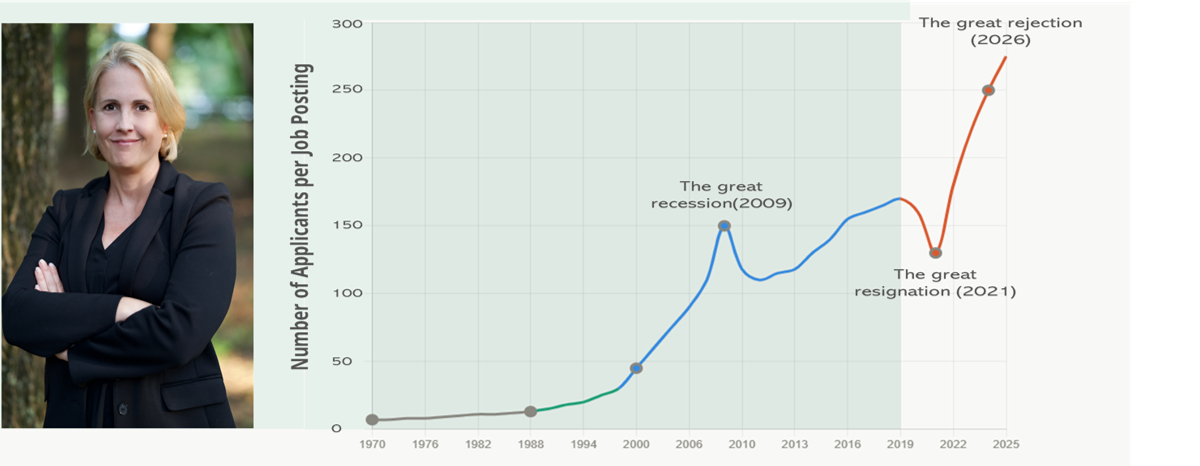
Thriving in the Great Rejection Era : A case for Resiliance
Are we entering the Great Rejection Era?
For decades, getting a job was a competitive process, but it was also a relatively contained one. Candidates applied to a limited number of roles, often within a specific geography, and employers reviewed a manageable pool of applicants. That balance has shifted dramatically. Today, it is not unusual for a single job posting to attract more than 400 applicants, especially for roles that are remote or broadly accessible.
At first glance, this may look like progress. Technology has made opportunity more visible and more accessible. Anyone, anywhere, can apply within minutes. But beneath that convenience lies a profound imbalance. For every open position, one person receives an offer, often accompanied by a surge of confidence, relief, and renewed momentum. Meanwhile, hundreds of others, many of them qualified, receive a rejection or no response at all.
When this dynamic is repeated across millions of job applications, it creates something larger than a hiring challenge. It becomes a shared psychological experience. Rejection is no longer an occasional setback; for many, it is a constant backdrop to their professional lives. The frequency and impersonality of these rejections can erode confidence, making even highly capable individuals question their value in the market.
In this context, it is essential for job seekers to interpret rejection differently. In a system defined by volume and probability, rejection is often not a verdict on ability, but a reflection of scale. Understanding this does not remove the disappointment, but it can reframe the experience. Each application, each interview, each outcome becomes part of a learning curve, an opportunity to refine positioning, clarify strengths, and move forward with greater focus and resilience.
This is not simply a story about job seekers. Employers are also navigating an environment that is increasingly difficult to manage. Faced with hundreds of applications per role, companies rely more heavily on automated systems to filter candidates. While efficient, these systems inevitably exclude people who might have been strong fits under a more human review process. The result is a paradox: more candidates than ever, yet often a persistent feeling that the “right” talent is hard to find.
If this is indeed a structural shift, then it calls for a rethink on both sides of the market. For recruiters and hiring leaders, it may be time to explore alternative models that go beyond traditional job postings. This could include building curated talent communities, prioritizing skills-based assessments over résumé screening, creating pathways through short-term projects or trial engagements, and investing in more transparent and human-centered communication with candidates. These approaches may not eliminate volume, but they can improve signal, fairness, and experience.
So, are we in the Great Rejection Era? Perhaps not in the sense that opportunities have disappeared, but in the sense that rejection has become the dominant experience of the job search. If that is the case, then the challenge ahead is not only to create more opportunities, but also to reshape how we connect people to them in a way that preserves dignity, builds resilience, and restores trust in the process.
Because in a system where hundreds compete for a single role, the question is no longer just who gets hired. It is how everyone else experiences the journey and what they take from it.